Understanding CNC Pipe Bending: Key Concepts and Benefits
CNC Pipe Bendding is a production process that uses computers on Computer Numeric Control (CNC) to divert pipes and pipes to accurate forms. Unlike manual bending, CNC Technology provides automation, accuracy and repetition, which is essential in industries such as motor vehicles, aerospace, oil and gas, furniture and construction.
The need to bend CNC pipes occurs as pipes are not always used directly. While maintaining strength and stability, they should bend at specific angles and reduce. Traditional methods often produce inaccuracy or require high work entrance, but the CNC system allows companies to reduce errors, save content and improve efficiency.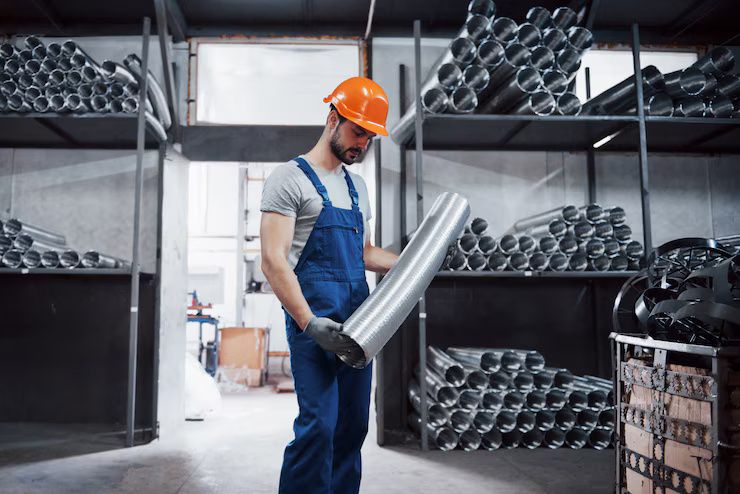
Importance
CNC Pipe Bendding plays an important role in modern production:
Accurate and stability: Ensure accurate turns, are important for aviation, shipbuilding and automotive industries.
Material efficiency: The bending reduces waste by adapting radius and reducing cracks or malformations.
Design flexibility: Allows complex tubes that meet industry -specific requirements.
Better productivity: Automatic machines reduce manual labor and increase production.
Cost efficiency: While the first investment is high, long -term benefits include low error rates and low reunification.
Industries that rely on pipelines, fluid transport systems and light structures are most served by bending CNC pipes. For example, exhaust systems are produced in vehicles and hydraulic pipes in aircraft usually using CNC technology to meet strict safety and performance standards.
Newer updates
CNC Pipe Bendding Area has seen many progress the year before (2023-2024):
Integration with AI: Smart algorithms now optimize bending sequences, lowers the cycles time and equipment wear.
Environmentally friendly construction: Companies develop energy -rooted machines to match stability goals.
Hybrid machines: New model processes add bending, cutting and final formation to a machine to streamline processes.
Digital twins: Manufacturers almost simulate the pipes that almost bend before physical production and lower costs.
Market growth: According to recent reports, the global market for CNC Pipe Bending Machine is expanded due to increasing demand for motor vehicles and construction industries.
These trends suggest that the CNC pipe bending is moving towards smarter, green areas and more integrated systems.
Laws or guidelines
CNC pipe bending is shaped by different types of rules and industry standards:
ISO Standard: International Standard defines tolerance and material safety for Vågen Vågen pipes.
Asme (American Society of Mechanical Engineers): Set the code for piping systems in power plants, refineries and industrial plants.
OSHA Regulations: U.S. In, safety requirements in the workplace run machinery for safety for workers.
Environmental regulations: governments encourage energy -efficient machines and footprints with low carbon.
Country -specific building code: For example, the EU implements strict rules for pipes used in construction and transport.
Compliance not only ensures product safety, but also international trade acceptance.
Tools and resources
Many tools and resources help companies and professionals work with CNC Pipe Bendding:
Software tools: SolidWorks, AutoCAD and Bend-Tech for design and simulation.
Online Calculator: Pipe Bend Radius Calculator, Springback Estimator.
Website: World Steel Association, Machinery Market Insights.
Guidelines and standards: Asme Code, ISO 9001 Quality system.
Learning resources: YouTube Tutorial, manufacturer's manual and technical training program.
These resources provide support in design, compliance and processing.
Table: CNC pipe bending versus manual bending comparison
| Feature | CNC Pipe Bending | Manual Bending |
|---|---|---|
| Accuracy | High, with computer-controlled precision | Moderate, dependent on operator skill |
| Efficiency | Fast, consistent, less material waste | Slower, higher risk of error |
| Complexity of Shapes | Can handle advanced, multi-angle bends | Limited to simpler bends |
| Labor Requirement | Minimal supervision needed | High manual labor |
| Cost | Higher upfront investment, lower errors | Lower cost initially, higher errors |
question to ask
Q1. Which industries use CNC pipes that include the most?
CNC pipe inflection is the most common in motor vehicles, aerospace, shipbuilding, oil and gas, furniture and plumbing industries where accurate and durability are important.
Q2. How is the CNC pipe different from traditional bending?
CNC automatically uses computer control to achieve an accurate turn, while the traditional bending depends on the manual entrance, which is less accurate and more labor -intensive.
Q3. Can CNC tubes bend all the ingredients?
Yes, CNC machines can bend steel, stainless steel, aluminum, copper and other alloys, although adjustment may be necessary based on thickness and hardness.
Q4. What are the most important challenges of bending the CNC tube?
General challenges include springback (slightly returned pipes to the original size), the tool's wear and configuration costs. Advanced simulation equipment helps control these.
Q5. Is CNC pipes environmentally friendly?
Yes, modern CNC machines are more energy-efficient and reduce physical waste, making them more durable than traditional methods.
Final thoughts
CNC pipe bending has changed how industries forms pipes and pipes, provides accurate, stability and efficiency that manual methods cannot send. With the increase in smart production, digital simulation and stability-centered innovations, CNC technology becomes an even more important part of global production.
For companies, CNC Pipe Bending benefits and compliance remain competitive, and meet modern infrastructure and advanced production requirements.