Industrial Robotics Guide: Basics, Insights & Key Information
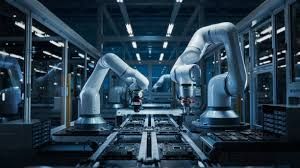
Industrial robotics refers to the design, development, and deployment of robots in manufacturing and production settings. Unlike service robots (used in homes, healthcare, or education), industrial robots are typically fixed or mobile machines that perform repetitive, precise, or heavy-duty tasks such as welding, assembly, painting, packaging, inspection, and material handling.
Industrial robots emerged because many manufacturing tasks are repetitive, physically demanding, hazardous, or require accuracy beyond human consistency. Over time, as technology advanced, robots evolved from simple mechanical devices into intelligent systems capable of sensing, decision-making, and collaborating with humans.
Key reasons industrial robots exist include:
-
High demand for accuracy and consistency
-
Need to reduce workplace risks and repetitive strain
-
Requirement for higher production output
-
Growth of digital manufacturing and automation technologies
Why Industrial Robotics Matters Today
Industrial robotics plays a central role in modern manufacturing due to several important factors.
Productivity and Quality Enhancement
Robots can work continuously with steady precision. This helps organizations maintain quality standards and achieve higher production outputs.
Managing Labor Shortages
Globally, many industries face shortages of skilled workers for repetitive or hazardous roles. Robots help fill this operational gap, ensuring uninterrupted production.
Flexibility in Manufacturing
Modern robots are increasingly adaptable. Collaborative robots, reconfigurable arms, and mobile manipulators can shift between tasks, supporting dynamic production needs.
Integration with Digital Technologies
Industrial robotics is closely connected with AI, machine learning, IoT, and digital twins. These technologies enhance planning, predictive maintenance, and real-time monitoring.
Safety Improvements
Robots reduce the need for humans to work in hazardous environments involving heat, chemicals, sharp objects, or heavy loads.
Sustainability and Waste Reduction
Automated processes help reduce material waste, optimize energy use, and support sustainable manufacturing practices.
Economic and Industrial Competitiveness
Automation helps industries stay competitive by improving efficiency, ensuring standardization, and strengthening supply chain resilience.
Recent Developments and Trends (2024–2025)
The field of industrial robotics is advancing rapidly. Below are notable developments from the past year.
AI-Enhanced Robotics
Robots are increasingly integrated with artificial intelligence for decision-making, vision processing, and autonomous learning. Generative models and physical-AI systems are being used to optimize robot motion, planning, and task execution.
Collaborative and Humanoid Robots
There is growing adoption of collaborative robots that can safely work alongside humans. In parallel, humanoid robots are being tested for industrial workflows, especially tasks requiring human-like movement.
Rising Global Deployments
Robot installations have continued to grow, especially in Asia, which remains the world’s largest adopter of industrial robotics. Many manufacturers have doubled down on automation to strengthen supply chains and prepare for future disruptions.
Growth in Market Valuation
Multiple industry reports released in 2024 and 2025 show strong market expansion in robotics, driven by demand for automation, innovation in robotic components, and integration with AI.
Academic and Research Progress
Research in motion planning, high-degree-of-freedom systems, digital twins, safety sensors, and thermal imaging has accelerated. Several new preprint papers published in 2024–2025 highlight advancements in GPU-based planning and automatic reconfiguration of robotic environments.
National Robotics Initiatives
Countries worldwide are forming alliances between governments, universities, and industry to strengthen robotics development. These collaborations focus on talent building, hardware innovation, and global competitiveness.
Laws, Policies, and Regulatory Considerations
Industrial robotics is influenced by several regulations, standards, and national programs.
Safety Standards
Robots must comply with established safety frameworks such as:
-
ISO standards for industrial robot design and operation
-
Technical specifications for collaborative robots
-
Risk assessment guidelines for factories
These standards ensure safe interaction between robots and human workers.
India’s Industrial and Technology Policies
While India does not have a dedicated robotics law, several policy areas influence its robotics ecosystem:
-
National manufacturing programs that promote automation
-
Production-linked incentive schemes supporting technology adoption
-
Regulations on imports, quality standards, and certification
-
Technology innovation missions that encourage R&D and digital manufacturing
Industrial robot installations in India have grown significantly in recent years, supported by increased demand for automation and expansion of local manufacturing.
AI Governance and Data Rules
With robots becoming AI-driven and connected to networks, data protection requirements apply to collected images, sensor streams, or operational logs. AI governance frameworks focus on transparency, fairness, and responsible deployment.
Intellectual Property and Innovation Support
Patents, design rights, and R&D incentives help organizations protect and commercialize robotic innovations. Many countries provide research grants or tax incentives for advanced manufacturing.
Trade and Import Regulations
Custom duties and quality certifications apply to robotic components such as controllers, motors, and sensors. Nations encourage local supply chains to reduce dependency on imported components.
Useful Tools and Resources for Industrial Robotics
Here are reliable tools and resources relevant to industrial robotics:
Industry Reports and Data Platforms
-
Robotics market research reports
-
Global robotics statistics and annual installation data
-
Trend analyses covering AI, automation, and manufacturing
Standards and Compliance Resources
-
ISO documentation on robot safety
-
Risk-assessment templates
-
Compliance checklists for industrial environments
Software and Simulation Tools
-
Digital twin platforms for simulating robot behavior
-
Robotic simulation tools used for planning layouts and training models
-
Motion-planning libraries optimized for high-performance robotics
Programming and AI Frameworks
-
Robot Operating System (ROS)
-
Computer vision libraries
-
AI and machine-learning frameworks for robotic perception
Academic and Learning Resources
-
Research papers on robotics, digital twins, and safety systems
-
Workshops, robotics challenges, and technical conferences
-
University-hosted robotics labs and open datasets
Frequently Asked Questions
Q: What are the main types of industrial robots?
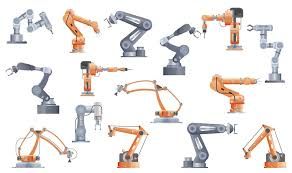
A: Common types include articulated robots, SCARA robots, Cartesian robots, parallel robots, delta robots, and collaborative robots. Each type is suited for specific tasks depending on speed, motion range, and precision requirements.
Q: Do industrial robots reduce the need for human workers?
A: Robots typically take over repetitive, hazardous, or precision-heavy tasks. While they may change workforce requirements, humans remain essential for supervision, programming, troubleshooting, creativity, and decision-making.
Q: Are industrial robots safe to use in factories?
A: Yes, when operated under proper safety standards. Industrial robots follow rigorous guidelines related to speed limits, emergency stop functions, workspace protection, and risk assessment procedures. Collaborative robots include built-in features that detect human presence.
Q: What skills are required to work with industrial robotics?
A: Useful skills include mechanical knowledge, electrical systems, robotics programming, safety procedures, vision systems, digital twins, and data analytics. Many roles also require understanding of sensors and control systems.
Q: Can industrial robots adapt to new tasks?
A: Modern robots can be reprogrammed or reconfigured for different tasks. With AI and machine learning, some robots can learn from demonstrations or adjust behavior based on changing inputs.
Conclusion
Industrial robotics has become a cornerstone of modern manufacturing, shaping how products are made, assembled, and inspected. Its importance continues to grow due to global demand for precision, safety, productivity, and sustainable operations. The integration of artificial intelligence, digital twins, and collaborative technologies is transforming robots into flexible, intelligent tools that work alongside humans.
Recent advancements in research, national policies, and market growth reflect a clear shift toward widespread automation. Whether in automotive plants, electronics production, or small-scale workshops, robotics is redefining industrial workflows.
Understanding industrial robotics provides valuable insights into how future factories will operate—more automated, more connected, and more efficient. As innovation continues, the relationship between humans and robots will evolve, shaping a new era of industrial capability.