Explore Welding Manipulators: Guide, Basics, Insights and Practical Information
Welding manipulators are industrial support systems designed to position welding tools and components accurately during fabrication processes. These machines help control the movement of welding heads, torches, or other equipment, ensuring consistent weld quality across large or complex structures.
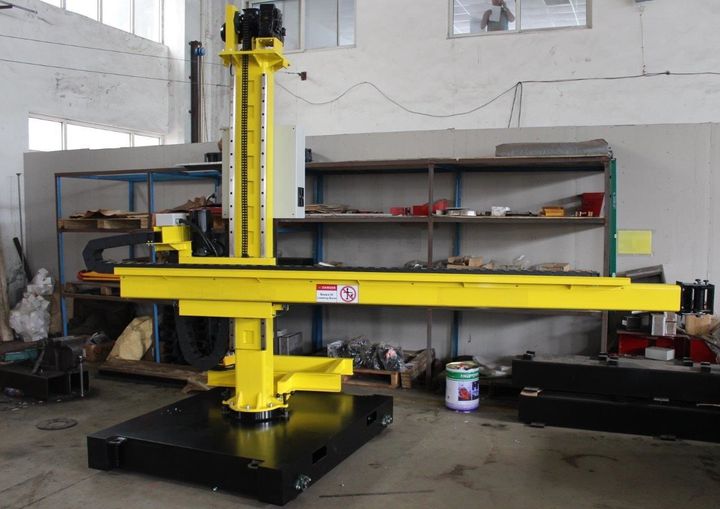
A typical welding manipulator consists of a vertical column and a horizontal boom. The boom holds the welding apparatus, which can move along different axes to reach the required welding position. This design allows operators or automated systems to perform precise welds on large structures such as pressure vessels, pipelines, structural frames, and heavy machinery components.
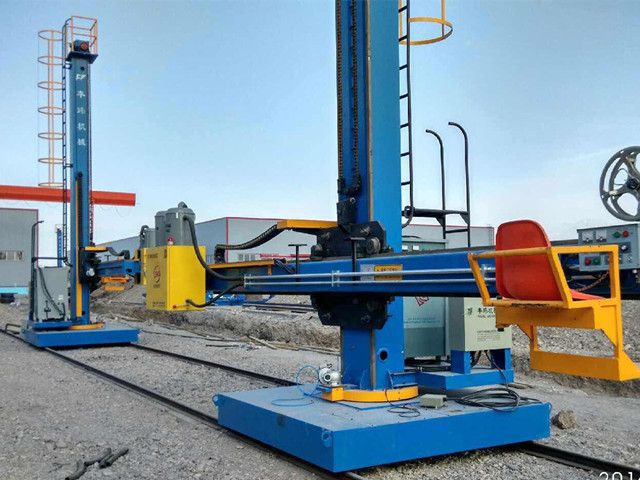
In many fabrication environments, welding tasks require long seams or repetitive movements. Performing such operations manually can be difficult, time-consuming, and inconsistent. Welding manipulators were developed to address these challenges by enabling controlled motion and stable positioning during welding operations.
The concept emerged alongside the broader development of industrial automation. As manufacturing sectors began producing larger and more complex metal structures, the need for consistent welding accuracy increased. Welding manipulators became an essential tool in automated welding systems, helping industries maintain reliable production standards.
Modern manipulators often integrate with automated welding technologies, sensors, and programmable controls. This integration allows welding equipment to follow precise paths and maintain consistent speed, which is essential for high-quality welds.
Why Welding Manipulators Matter in Modern Manufacturing
Industrial welding is a critical process used in sectors such as construction, shipbuilding, energy infrastructure, transportation manufacturing, and heavy engineering. Welding manipulators play an important role in improving accuracy, efficiency, and safety within these environments.
One of the main reasons these systems matter today is the increasing demand for precision manufacturing. Many modern structures require welds that meet strict technical standards. Automated positioning provided by welding manipulators helps ensure consistent weld penetration and alignment.
Another important benefit is improved operator safety. Welding large structures often requires working in difficult positions or handling heavy components. Manipulators reduce the need for manual positioning of welding equipment, allowing operators to control the process from safer locations.
These systems also contribute to productivity improvements. When welding paths are controlled automatically, the process becomes more repeatable. This repeatability helps reduce errors, improve production consistency, and minimize material waste.
Welding manipulators also support several advanced welding techniques used in modern fabrication environments. These include submerged arc welding, gas metal arc welding, and flux-cored arc welding, which require stable and precise positioning.
Below is a simplified comparison showing how automated welding support systems can influence production efficiency.
| Welding Approach | Position Control | Consistency | Operator Effort | Typical Use |
|---|---|---|---|---|
| Manual Welding | Limited | Moderate | High | Small fabrication tasks |
| Semi-Automated Welding | Moderate | Improved | Moderate | Medium industrial work |
| Welding Manipulator Systems | Precise | High | Lower | Large industrial structures |
In industries dealing with heavy steel structures, even small improvements in welding precision can significantly influence overall project quality and durability.
Recent Developments and Trends in Welding Manipulator Technology
Industrial automation has continued to evolve rapidly, and welding manipulator systems have adapted to incorporate new technologies. Over the past year, several developments have shaped how these machines are used in manufacturing environments.
One noticeable trend has been the integration of welding manipulators with robotic welding systems. Instead of operating as standalone machines, manipulators are increasingly connected to robotic arms and programmable controllers. This combination allows complex weld paths to be executed automatically.
Another development involves the use of digital monitoring systems. Modern welding equipment can now collect data related to welding parameters, arc stability, and equipment movement. These digital systems help engineers monitor welding performance and improve process accuracy.
Several manufacturers and research organizations reported improvements in sensor-guided welding technologies during recent industry exhibitions and engineering conferences held throughout the past year. These systems use laser sensors or vision systems to detect seam locations and adjust the welding path automatically.
The integration of industrial internet technologies has also expanded. Some welding automation platforms now allow remote monitoring of welding equipment, including manipulators, through centralized control dashboards.
The following chart illustrates how industrial welding automation has gradually expanded across different sectors.
Industrial Welding Automation Adoption

Energy Infrastructure       ████████████
Heavy Machinery             ██████████
Shipbuilding                █████████
Transportation Equipment    ████████
General Fabrication         ██████
This growth reflects the increasing need for consistent welding performance in complex engineering projects.
Another emerging trend involves modular welding systems. Instead of large fixed machines, manufacturers are exploring modular manipulator systems that can be configured for different fabrication tasks.
These developments highlight how welding manipulators are becoming an important component within broader automated manufacturing ecosystems.
Regulations and Standards Influencing Welding Manipulator Use
Industrial welding equipment, including manipulators, operates within a framework of technical standards and safety guidelines. These standards help ensure that welding processes are safe, reliable, and capable of producing high-quality results.
Various international engineering and manufacturing organizations publish standards related to welding operations and equipment safety. These standards often address areas such as structural integrity, welding procedure qualifications, operator safety, and equipment design requirements.
Safety considerations are particularly important because welding processes involve high temperatures, electrical systems, and sometimes hazardous fumes. Equipment used in automated welding environments must therefore follow strict safety guidelines to reduce workplace risks.
Workplace safety frameworks typically emphasize:
-
Proper shielding and protection from welding arcs
-
Electrical safety standards for welding equipment
-
Mechanical stability of heavy automation systems
-
Safe operating procedures for industrial machinery
Environmental guidelines may also influence welding operations. Some industrial regulations encourage the use of cleaner welding processes and improved ventilation systems to reduce airborne particles produced during welding.
In many engineering environments, organizations also follow quality management frameworks that include welding inspection and documentation requirements. These frameworks ensure that welded structures meet technical specifications and structural reliability expectations.
Compliance with these standards is important for industries involved in infrastructure development, heavy equipment manufacturing, and energy systems, where welding quality directly affects long-term structural safety.
Helpful Tools and Resources for Learning About Welding Manipulators
Understanding welding manipulators and automated welding systems often involves using various technical resources. These tools help engineers, students, and researchers explore welding processes, equipment capabilities, and fabrication techniques.
Educational and technical resources commonly include:
-
Welding process simulation software
-
Industrial automation learning platforms
-
Welding parameter calculators
-
Engineering design software for fabrication planning
-
Technical manuals and welding procedure guides
Simulation tools are particularly useful for studying welding automation. These programs allow users to visualize how welding manipulators move and how weld paths are created during fabrication.
Engineering design software also plays a role in planning welding operations. These platforms help designers model structures and determine how welding equipment should access different parts of a component.
Some widely used learning resources in welding technology include:
-
Engineering research journals focused on welding science
-
Online training modules for welding automation
-
Technical handbooks covering welding metallurgy and processes
-
Digital libraries containing fabrication engineering publications
The following table highlights categories of resources that support knowledge development in welding automation.
| Resource Type | Purpose |
|---|---|
| Simulation Software | Visualize automated welding movements |
| Engineering Design Tools | Plan welding paths and structural designs |
| Technical Manuals | Explain welding procedures and standards |
| Educational Platforms | Provide training on welding automation |
| Research Publications | Share advancements in welding science |
These tools help professionals and learners understand how welding manipulators fit into larger manufacturing workflows.
Common Questions About Welding Manipulators
What is a welding manipulator used for?
A welding manipulator is used to position welding equipment accurately during fabrication processes. It supports welding torches or heads and allows them to move along controlled paths while maintaining consistent welding parameters.
How does a welding manipulator work?
The system typically includes a vertical column and a horizontal boom. The welding tool is mounted on the boom, which moves along the structure being welded. Controlled movement allows precise welding along seams or joints.
What industries use welding manipulators?
Welding manipulators are commonly used in industries that fabricate large metal structures. Examples include shipbuilding, heavy machinery manufacturing, energy infrastructure construction, and transportation equipment production.
Are welding manipulators part of industrial automation?
Yes. Welding manipulators are often integrated with automated welding systems. They may work with robotic welding arms, programmable controllers, and digital monitoring systems to improve welding accuracy and consistency.
Do welding manipulators improve welding quality?
Controlled positioning helps maintain consistent welding speed, angle, and alignment. This consistency supports more uniform weld results and reduces variations that can occur during manual welding operations.
Conclusion
Welding manipulators play an important role in modern industrial fabrication. By providing stable positioning and controlled movement for welding equipment, these systems help improve welding accuracy, repeatability, and operational safety.
As manufacturing environments continue to adopt automation technologies, welding manipulators are becoming increasingly integrated with robotic systems, digital monitoring tools, and advanced sensor technologies. These developments support more efficient and reliable welding processes across many industrial sectors.