Explore Automated Guided Vehicles: A Complete Guide, Basics, and Key Insights
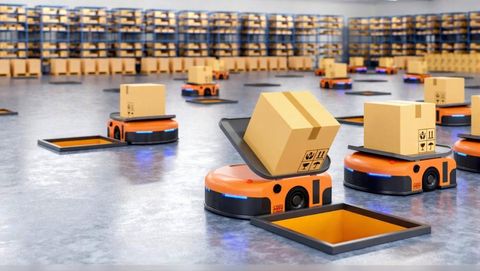
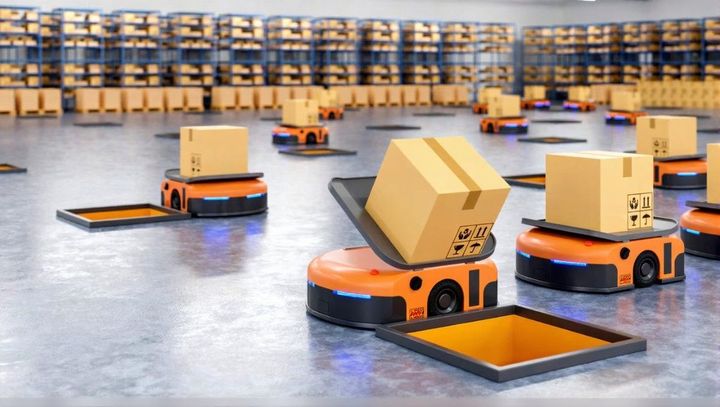
Automated Guided Vehicles, commonly known as AGVs, are mobile machines designed to move materials or goods within controlled environments without direct human operation. They follow predefined paths or dynamically navigate using sensors, maps, and control software. AGVs exist to support repetitive transport tasks that were traditionally handled by manual carts, forklifts, or conveyor systems.
The concept behind AGVs emerged from the need to improve internal logistics. As production volumes increased and facilities became larger, moving materials efficiently and consistently became more complex. AGVs address this challenge by providing a predictable and automated way to transport items between workstations, storage areas, and loading points.
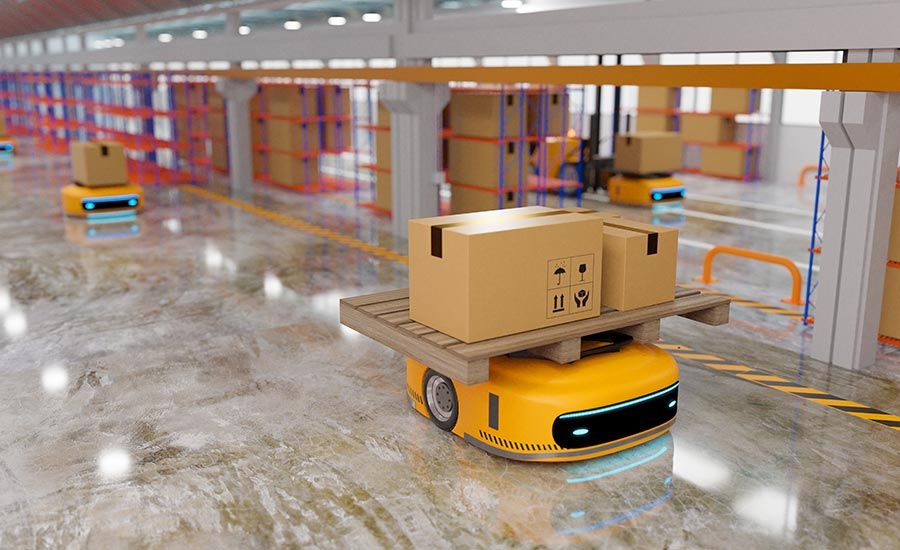
AGVs are used across many environments, including manufacturing floors, warehouses, distribution centers, and healthcare facilities. Their design can vary from small units carrying light loads to heavy-duty platforms capable of transporting large components. Despite these differences, the core purpose remains the same: structured, automated material movement.
Importance: Why Automated Guided Vehicles Matter Today
Automated Guided Vehicles play a significant role in modern operations because they address multiple practical challenges at once. They are relevant to organizations that manage high volumes of internal transport and need consistency in movement patterns.
Key reasons AGVs matter include:
-
Operational consistency: AGVs follow programmed routes and rules, reducing variation in material flow.
-
Workplace safety: By minimizing manual handling and vehicle traffic, AGVs help reduce accident risks.
-
Process reliability: Automated movement ensures materials arrive at the right place at the right time.
-
Scalability: AGV systems can be expanded by adding vehicles or adjusting routes digitally.
Industries affected by AGV adoption include manufacturing, logistics, healthcare, and food processing. For example, in manufacturing, AGVs support just-in-time workflows by delivering components exactly when needed. In healthcare settings, they are used to transport supplies, linens, or waste, allowing staff to focus on patient care.
From a broader perspective, AGVs solve the problem of balancing efficiency with safety in environments where material flow is constant and predictable.
Recent Updates: Trends and Developments in AGV Technology
In recent periods, AGV technology has evolved beyond fixed-path navigation. One notable trend is the shift toward more flexible navigation methods. Modern AGVs increasingly rely on sensor-based guidance, such as laser scanning and vision systems, allowing them to adapt to layout changes without physical markers.
Another development is the integration of AGVs with centralized management software. These platforms coordinate multiple vehicles, optimize routes, and monitor performance in real time. This has led to smoother traffic control and better use of available space.
There has also been growing alignment between AGVs and data-driven systems. AGVs now generate operational data that can be analyzed to improve layout planning, maintenance scheduling, and workflow design. As facilities aim for higher levels of automation, AGVs are often positioned as a foundational component that connects physical movement with digital control systems.
Laws or Policies: General Regulatory Considerations
Automated Guided Vehicles operate within established safety and operational frameworks. While specific rules vary by region, general principles apply across most environments. These principles focus on ensuring that AGVs can safely coexist with human workers and other equipment.
Common regulatory considerations include:
-
Workplace safety standards that define safe speeds, stopping distances, and emergency features
-
Equipment compliance requirements for sensors, warning signals, and control systems
-
Operational guidelines covering training, supervision, and system maintenance
Rather than being governed by a single dedicated regulation, AGVs are usually covered under broader industrial safety and machinery guidelines. Organizations deploying AGVs typically conduct risk assessments and implement safeguards such as audible alerts, visual indicators, and defined traffic rules.
Tools and Resources: Helpful Support for Understanding and Managing AGVs
A range of tools and resources can help users better understand, plan, and manage AGV systems. These resources focus on design, monitoring, and optimization rather than commercial activity.
Helpful categories include:
-
Simulation software that models AGV routes and traffic flow
-
Fleet management platforms for monitoring vehicle status and performance
-
Layout planning tools that support efficient path design
-
Educational resources such as technical guides and industry standards documentation
These tools are often used during planning stages to test scenarios and during operation to maintain smooth performance. For learners and professionals, reference materials explaining navigation methods, safety principles, and system architecture provide valuable foundational knowledge.
How Automated Guided Vehicles Work: A Simple Overview
AGVs rely on a combination of hardware and software to function effectively. At a basic level, they consist of a vehicle body, a drive system, sensors, and a control unit.
A simplified process flow looks like this:
| Step | Description |
|---|---|
| Task assignment | The system assigns a transport request |
| Navigation | The AGV follows its guidance method |
| Obstacle handling | Sensors detect and respond to obstacles |
| Delivery | The load is placed at the destination |
| Return or reassignment | The AGV awaits the next task |
To visualize performance improvements, consider the following simplified comparison:
| Aspect | Manual Transport | AGV-Based Transport |
|---|---|---|
| Route consistency | Variable | Predictable |
| Monitoring | Limited | System-tracked |
| Repeatability | Depends on operator | Programmed |
These tables highlight how AGVs contribute to structured and measurable workflows.
FAQs: Common Questions About Automated Guided Vehicles
What is the difference between an AGV and a traditional industrial vehicle?
An AGV operates automatically based on programmed instructions and sensor input, while traditional industrial vehicles require direct human control.
Can AGVs work alongside people safely?
Yes. AGVs are designed with safety sensors and control logic that allow them to detect obstacles, reduce speed, or stop when people are nearby.
Are AGVs limited to fixed routes?
Earlier systems relied on fixed paths, but many modern AGVs use flexible navigation that adapts to changing layouts.
What environments are suitable for AGVs?
AGVs are best suited for controlled environments such as warehouses, production floors, and healthcare facilities where routes and tasks are well defined.
Do AGVs require constant supervision?
AGVs typically operate autonomously, with oversight provided through monitoring software rather than continuous human control.Conclusion: Key Insights on Automated Guided Vehicles
Automated Guided Vehicles represent an important step in the evolution of internal logistics and material handling. They exist to provide consistent, safe, and reliable movement of goods within structured environments. By reducing reliance on manual transport, AGVs help organizations improve workflow predictability and operational clarity.
Ongoing developments in navigation, data integration, and system coordination continue to expand what AGVs can achieve. As automation becomes more interconnected, AGVs serve as a practical bridge between physical operations and digital control systems. Understanding their basics, importance, and supporting tools offers valuable insight into how modern facilities manage movement efficiently and safely.