How Heat Exchangers Work: Process, Techniques & Detailed Explanation
Heat exchangers are engineered devices designed to transfer heat from one fluid to another without mixing the fluids. They are used wherever heating or cooling is required as part of a controlled process. The fluids involved may be liquids, gases, or a combination of both, and they typically flow through separate channels divided by solid walls.
The primary reason heat exchangers exist is efficiency. Direct heating or cooling methods often waste energy, whereas heat exchangers allow thermal energy to be reused, recovered, or redistributed. This makes them fundamental components in industries such as power generation, chemical processing, pharmaceuticals, food processing, HVAC systems, oil and gas, and refrigeration.
Over time, heat exchanger design has evolved to support higher efficiency, safer operation, and better control over temperature-sensitive processes.
Why Heat Exchangers Matter Today
Heat exchangers play a vital role in modern industry and infrastructure because energy efficiency and temperature control are critical to performance, safety, and sustainability.
They matter today for several reasons:
-
Rising energy costs have increased the importance of heat recovery
-
Environmental regulations encourage reduced energy consumption
-
Many industrial processes require precise temperature control
-
Equipment reliability depends on effective heat management
Heat exchangers affect a wide group of users, including plant operators, engineers, facility managers, and environmental regulators. Poor heat transfer can lead to reduced product quality, equipment stress, or excessive energy use.
Key problems heat exchangers help solve include:
-
Removing excess heat from systems to prevent damage
-
Preheating fluids to reduce energy demand
-
Maintaining stable operating temperatures
-
Improving overall process efficiency
As industries aim for lower emissions and optimized operations, heat exchangers have become increasingly important.
Basic Heat Transfer Process in Heat Exchangers
The operation of a heat exchanger is based on the principle of heat transfer, which occurs due to a temperature difference between two fluids. Heat flows from the hotter fluid to the cooler one until equilibrium is approached.
The process generally involves three modes of heat transfer:
-
Conduction through the solid wall separating the fluids
-
Convection within each fluid as it flows
-
Radiation, which is usually minimal in most industrial exchangers
A typical heat exchange process follows these steps:
-
Hot fluid enters the exchanger and flows along one side
-
Cold fluid enters through a separate channel
-
Heat passes through the wall between the fluids
-
Fluids exit at adjusted temperatures
The direction of fluid flow has a significant impact on efficiency. Common flow arrangements include parallel flow, counterflow, and crossflow.
A simplified overview is shown below:
| Process Element | Role |
|---|---|
| Hot Fluid Inlet | Heat source |
| Heat Transfer Surface | Thermal exchange medium |
| Cold Fluid Inlet | Heat receiver |
| Outlet Streams | Controlled temperature output |
Understanding this process helps explain why exchanger design is closely tied to application requirements.
Common Techniques Used in Heat Exchangers
Different techniques are used to maximize heat transfer while minimizing pressure loss and material stress. These techniques depend on the type of exchanger and the operating conditions.
Key techniques include:
-
Increasing surface area using tubes, plates, or fins
-
Enhancing turbulence to improve heat transfer
-
Using counterflow arrangements for higher efficiency
-
Selecting materials with good thermal conductivity
Extended surfaces such as fins are commonly used in gas-to-liquid exchangers, where heat transfer rates are naturally lower. In liquid-to-liquid systems, compact designs help achieve efficient heat exchange within limited space.
A comparison of flow techniques is shown below:
| Flow Technique | Characteristics |
|---|---|
| Parallel Flow | Simple design, lower efficiency |
| Counterflow | Higher thermal efficiency |
| Crossflow | Common in air cooling systems |
These techniques are chosen based on performance requirements rather than complexity alone.
Types of Heat Exchangers
Heat exchangers are classified based on construction, flow arrangement, and application. Each type is designed to suit specific operating conditions.
Common types include:
-
Shell and tube heat exchangers, widely used in industrial processes
-
Plate heat exchangers, known for compact size and high efficiency
-
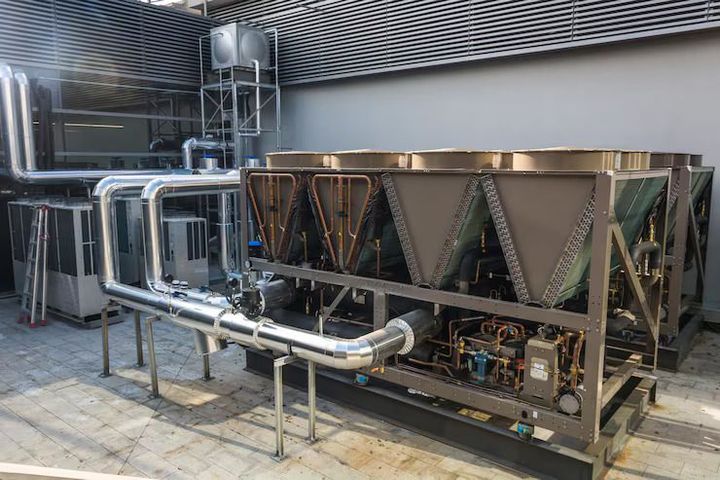
Air-cooled heat exchangers, using ambient air for cooling
-
Double pipe heat exchangers, used in smaller systems
-
Spiral heat exchangers, suitable for viscous fluids
A simplified comparison is shown below:
| Heat Exchanger Type | Typical Use |
|---|---|
| Shell and Tube | High-pressure processes |
| Plate | Compact systems |
| Air-Cooled | Water-limited locations |
| Double Pipe | Pilot-scale operations |
| Spiral | Fouling-prone fluids |
Each type balances efficiency, maintenance needs, and operating limits.
Recent Updates and Industry Trends
Over the past year, heat exchanger technology has focused on energy efficiency, compact design, and digital monitoring.
In February 2025, several industrial studies highlighted improved plate heat exchanger designs with enhanced gasket materials to support higher temperatures and longer service life.
By July 2025, digital temperature and pressure sensors integrated directly into exchanger assemblies became more common. These sensors support continuous performance monitoring and early fault detection.
Another notable trend in October 2025 involved increased use of heat recovery exchangers in industrial plants. These systems capture waste heat from exhaust streams and reuse it in upstream processes, supporting energy conservation goals.
A comparison of older and newer approaches is outlined below:
| Aspect | Earlier Designs | Recent Developments |
|---|---|---|
| Monitoring | Periodic manual checks | Continuous digital sensing |
| Efficiency Focus | Basic thermal design | Optimized heat recovery |
| Maintenance Insight | Reactive | Predictive trends |
| Integration | Standalone units | System-level integration |
These developments reflect growing emphasis on efficiency and reliability rather than capacity alone.
Regulatory and Policy Considerations in India
In India, heat exchangers are regulated indirectly through industrial safety, energy efficiency, and environmental policies. While no single law governs heat exchangers exclusively, their operation falls under broader frameworks.
Key regulations include:
-
The Factories Act, 1948, addressing equipment safety
-
The Energy Conservation Act, 2001, promoting efficient energy use
-
Environmental Protection rules, governing emissions and waste heat
During 2024–2025, policy discussions increasingly emphasized waste heat recovery and efficient thermal systems in energy-intensive industries. Compliance expectations include proper documentation, inspection, and safe operation of thermal equipment.
For export-oriented facilities, international standards related to pressure equipment and energy efficiency also influence exchanger design and usage.
Tools and Resources Related to Heat Exchangers
Several technical tools and reference resources support the design, evaluation, and operation of heat exchangers. These resources focus on analysis and optimization rather than commercial activity.
Useful tools include:
-
Heat transfer calculation worksheets
-
Log mean temperature difference (LMTD) calculators
-
Effectiveness–NTU analysis tools
-
Thermal performance monitoring templates
-
Engineering handbooks and standards
Common performance parameters tracked are shown below:
| Parameter | Purpose |
|---|---|
| Inlet and Outlet Temperature | Heat transfer assessment |
| Pressure Drop | Flow efficiency |
| Heat Duty | Energy transfer rate |
| Fouling Factor | Maintenance planning |
These tools help ensure stable and predictable exchanger performance.
Frequently Asked Questions About Heat Exchangers
How do heat exchangers improve energy efficiency?
They transfer heat from one process stream to another, reducing the need for additional heating or cooling energy.
Why is counterflow often preferred?
Counterflow allows a larger average temperature difference, improving overall heat transfer efficiency.
What causes fouling in heat exchangers?
Fouling occurs when deposits form on heat transfer surfaces, reducing efficiency and increasing pressure drop.
How is heat exchanger performance evaluated?
Performance is evaluated using temperature change, heat duty, effectiveness, and pressure loss.
Can one heat exchanger be used for multiple processes?
Some designs allow flexibility, but operating conditions must remain within validated limits.
Conclusion
Heat exchangers are essential components in industrial and building systems, enabling efficient and controlled heat transfer between fluids. Their importance extends beyond temperature adjustment to energy conservation, equipment protection, and environmental responsibility.
Recent trends highlight improved materials, digital monitoring, and increased focus on heat recovery. At the same time, regulatory expectations in India continue to encourage safe and energy-efficient thermal systems.
By understanding how heat exchangers work, the techniques they use, and the regulatory and analytical context surrounding them, readers gain a clear and practical perspective on their role in modern processes. This knowledge supports informed discussion and responsible system management without promotional claims or misleading information.