Explore Screw Heads Manufacture: Overview, Basics & Key Insights
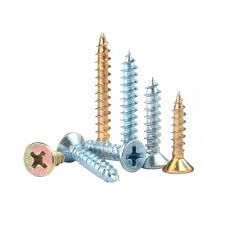
Screw heads are the shaped top portion of a screw designed for driving and fastening materials. Their form determines how a screw is inserted, how it fits into or onto a surface, and how it interacts with tools such as drivers or automated assembly equipment.
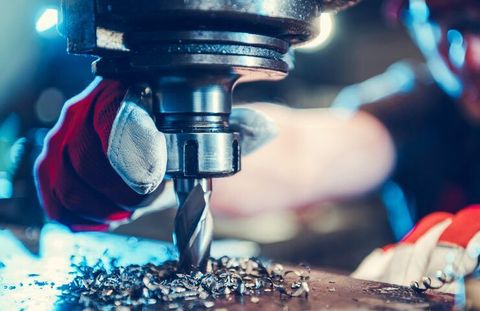
In manufacturing, screw heads are typically produced through cold forming, hot forging, or machining. The head shape is created first, followed by threading and finishing. Over time, many head designs—such as hex, pan, countersunk, and Torx—were developed to meet different structural, assembly, and aesthetic needs across industries.
Screw head manufacturing exists because modern products, machines, electronics, and structures rely on fasteners with consistent strength, precision, and performance. The integrity of the head directly affects how a screw behaves under torque, load, and long-term use.
Importance
Screw head manufacturing plays a critical role in multiple industries.
Why it matters today:
-
Industrial Dependence: Construction, automotive, machinery, and electronics rely heavily on screws with accurately manufactured heads for reliable assembly.
-
Performance and Safety: A screw head that is poorly formed may strip, deform, or fail to drive properly, leading to assembly issues or safety risks.
-
Global Supply Chains: Fasteners are produced and traded worldwide; consistent manufacturing practices help maintain quality and compatibility across regions.
-
Automation Readiness: Modern manufacturing uses automated assembly lines that require screws with precise head geometry so tools can grip and drive them correctly.
-
Problem Solving: Proper screw head design helps reduce cam-out, improve torque transfer, support flush mounting, and enable tamper-resistant applications.
In short, accurately manufactured screw heads contribute to efficiency, safety, durability, and quality across countless applications.
Recent Updates
Several developments over the past year highlight ongoing changes in screw and fastener manufacturing:
-
Market Growth: The global demand for screws and related fasteners continues to rise, with industry projections showing steady growth due to construction, automotive, and manufacturing expansion.
-
Smart Manufacturing: Companies are increasingly using automation, IoT monitoring, and data-driven quality-control systems in screw and fastener production.
-
Advanced Materials: There is growing use of high-strength alloys, corrosion-resistant coatings, and performance-enhancing materials for screw heads.
-
3D-Printing R&D: Although not yet mainstream for mass production, additive manufacturing is being explored for specialty fasteners and prototyping.
-
Head Design Evolution: Modern applications increasingly prefer drive systems such as Torx and hex-socket heads due to less slipping, better torque transfer, and improved assembly efficiency.
-
2024–2025 Quality Orders: Several countries, including India, have updated regulations affecting the production and certification of fasteners during 2023–2024, enforcing stricter standards for safety and quality.
These trends show that screw-head production is becoming more precise, technologically advanced, and closely monitored.
Laws or Policies
Screw head manufacturing is influenced by national and international standards that ensure consistency, safety, and quality.
India
-
The Bolts, Nuts and Fasteners Quality Control Orders (2023 and 2024) mandate compliance with specific Indian Standards for many fastener types, including screws.
-
Manufacturers must obtain a BIS licence and use the Standard Mark on compliant products.
-
Standards such as IS 1363 and IS 1367 outline dimensional requirements, tolerances, and performance criteria for screw heads and related fasteners.
United States
-
The Fastener Quality Act (FQA) requires certain fasteners to meet mechanical and dimensional specifications and follow strict testing and certification procedures.
International Standards
-
ISO standards define mechanical properties, tolerances, threading systems, and head geometry for a wide range of screws.
These policies ensure that screw heads meet safety requirements, maintain compatibility with tools and assemblies, and perform reliably in their intended applications.
Tools and Resources
Industry & Standards Resources
-
National standards organizations (e.g., BIS, ISO) for specifications, tolerances, and certification information
-
Engineering reference guides describing screw head shapes, drive types, and their uses
-
Manufacturing process resources detailing cold forming, forging, and machining
Technical Tools & Aids
-
Screw head dimension charts
-
Tolerance tables for head diameter, height, and drive recess shape
-
Material selection guides for fasteners
-
CAD models for head geometry used in design simulation
Quality & Manufacturing Tools
-
Torque measurement instruments
-
Go/No-Go gauges for head dimensions
-
Thread-rolling and cold-forming simulation software
-
Heat-treatment process controllers
-
Surface-coating and plating measurement equipment
These tools help manufacturers, engineers, and students better understand and evaluate screw head production.
FAQs
Q1: Why are there so many different screw head types?
Different applications require different torque levels, aesthetics, and tool compatibility. Some heads allow flush installation, while others support higher torque or reduce tool slippage.
Q2: How is a screw head created during manufacturing?
Most screw heads are produced by cold forming, where metal wire is cut to length and pressed into shape using dies. This is followed by thread rolling, heat treatment, and finishing.
Q3: Which screw head types reduce cam-out?
Hex socket, Torx, and Robertson (square) drives are designed to reduce slippage and allow better torque transfer compared to older slotted or traditional Phillips heads.
Q4: What manufacturing issues can affect screw head quality?
Common issues include incorrect head diameter, improper recess shape, uneven forming, poor heat treatment, and inconsistent coating thickness.
Q5: Do screw heads need certification?
In many countries, yes. Standards define dimensions, tolerances, and performance characteristics. Manufacturers must comply with national or international regulations depending on where the fasteners are distributed.
Conclusion
Screw head manufacturing may seem simple, but it involves careful engineering, precise forming techniques, and adherence to strict quality standards. The design of the head determines how effectively a screw performs, how well it transfers torque, and how safely it can be used in everyday products and industrial systems.
With advancements in materials, automation, and regulatory frameworks, screw head production continues to evolve. Understanding the fundamentals helps engineers, technicians, and learners appreciate how this small component plays a large role in the reliability and efficiency of modern structures, machinery, and technology.