Explore Mineral Detectors: A Complete Guide with Basics, Facts, and Key Information
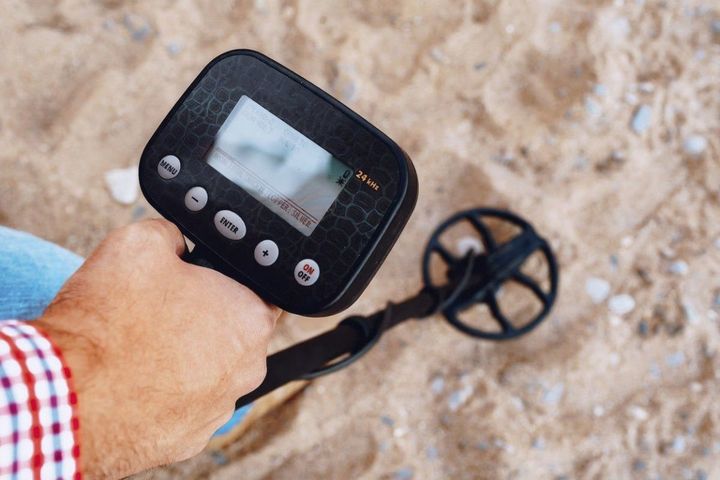
Mineral detectors are electronic instruments designed to identify the presence of minerals beneath the surface of the ground or within materials. They work by sensing physical or chemical properties—most commonly electrical conductivity, magnetic response, or density differences—to distinguish mineralized zones from surrounding material.
The idea behind mineral detection developed from the need to locate natural resources more efficiently and with less environmental disturbance. Instead of relying only on excavation or visual inspection, mineral detectors allow users to analyze what lies below the surface using non-invasive methods. This approach supports exploration, research, education, and environmental assessment.

At a basic level, most mineral detectors transmit a signal into the ground and then measure how that signal changes when it encounters mineralized material. Different minerals respond differently, which allows trained users to interpret the results.
Why Mineral Detectors Matter Today
Mineral detectors play an important role in modern society because minerals are essential to many industries and technologies. From construction materials to electronics and renewable energy systems, mineral resources influence daily life more than most people realize.
These tools matter for several key groups:
-
Geologists and researchers studying Earth’s structure and composition
-
Mining and exploration teams seeking efficient ways to identify mineral-rich zones
-
Environmental specialists assessing land without major surface disruption
-
Educators and students learning about applied geophysics and Earth science
Mineral detectors help solve practical problems such as reducing unnecessary digging, improving survey accuracy, and minimizing environmental impact. By identifying promising areas early, they support more responsible use of land and resources.
How Mineral Detectors Work in Simple Terms
Although models vary, most mineral detectors rely on a few core principles:
-
Electromagnetic response: A transmitted field interacts with minerals and produces a measurable signal
-
Magnetic properties: Certain minerals alter magnetic fields in detectable ways
-
Signal interpretation: Software or onboard processors help translate signals into readable data
Below is a simplified comparison of common detection principles:
| Detection Principle | What It Measures | Typical Use Case |
|---|---|---|
| Electromagnetic response | Electrical conductivity | Identifying conductive minerals |
| Magnetic variation | Changes in magnetic fields | Locating iron-bearing minerals |
| Density contrast | Mass differences underground | Geological mapping |
This layered approach improves accuracy and helps users adapt the tool to different environments.
Recent Developments and Emerging Trends
In recent months, mineral detection technology has continued to evolve, focusing on accuracy, portability, and data integration. One notable trend is the increased use of digital signal processing, which helps filter background noise and improve clarity in complex ground conditions.
Another important development is the integration of mapping and visualization features. Modern systems often allow detected data to be visualized in layered maps, making it easier to interpret patterns over large areas. Improvements in battery efficiency and lightweight materials have also made devices more practical for extended field use.
Artificial intelligence–assisted interpretation has begun to appear in advanced systems, helping users recognize mineral signatures more consistently. These updates reflect a broader movement toward smarter, data-driven exploration tools.
Rules, Standards, and Policy Influence
Mineral detectors operate within broader regulatory and policy frameworks related to land use, environmental protection, and scientific research. In many regions, the use of detection equipment is influenced by rules designed to protect cultural heritage sites, environmentally sensitive areas, and private land rights.
General policy themes that affect mineral detection include:
-
Environmental safeguards to limit surface disruption
-
Land access permissions for exploration activities
-
Research and survey standards that guide responsible data collection
These frameworks encourage careful, ethical use of detection technology while supporting scientific and educational objectives.
Helpful Tools and Learning Resources
A variety of tools and resources support understanding and effective use of mineral detectors. These resources are often educational or analytical in nature and help users interpret results accurately.
Useful categories include:
-
Geological mapping software for visualizing subsurface data
-
Signal analysis tools that explain conductivity and magnetic responses
-
Educational platforms offering tutorials on mineral detection basics
-
Reference databases describing mineral properties and signatures
Example overview of common resource types:
| Resource Type | Purpose |
|---|---|
| Mapping applications | Visual interpretation of detected data |
| Learning modules | Explaining detection principles |
| Reference charts | Comparing mineral responses |
These tools strengthen knowledge andPractical Facts About Mineral Detectors
-
Mineral detectors do not “see” minerals directly; they interpret physical responses.
-
Ground conditions such as moisture and soil composition influence accuracy.
-
Calibration is essential for reliable results.
-
Different minerals can produce similar signals, requiring careful analysis.
Understanding these facts helps set realistic expectations and supports responsible use.
Frequently Asked Questions
What types of minerals can detectors identify?
Mineral detectors can identify minerals with distinct electrical, magnetic, or density properties. The exact range depends on the detection method and calibration.
Do mineral detectors work in all environments?
They function in many environments, but performance can vary due to soil composition, moisture levels, and background mineralization.
Is technical training required to use a mineral detector?
Basic operation is often straightforward, but accurate interpretation benefits from training in geology or signal analysis.
How accurate are mineral detectors?
Accuracy depends on the technology used, environmental conditions, and user expertise. Results are typically interpreted as indicators rather than absolute confirmation.
Can mineral detectors replace traditional surveys?
They complement traditional surveys by providing preliminary data, but they are usually part of a broader exploration process.
Visual Overview of Detection Concepts
| Factor Influencing Detection | Effect on Results |
|---|---|
| Soil moisture | Alters signal strength |
| Mineral concentration | Affects response clarity |
| Instrument calibration | Improves consistency |
This table highlights how multiple variables interact during detection.
Key Takeaways and Final Thoughts
Mineral detectors are valuable educational and analytical tools that help identify subsurface mineralization using scientific principles. They exist to improve efficiency, reduce unnecessary disturbance, and support informed decision-making across research and exploration activities.
As technology advances, these instruments continue to become more precise, user-friendly, and data-oriented. Understanding how they work, why they matter, and the frameworks guiding their use allows individuals and organizations to apply them responsibly.
By combining sound knowledge, appropriate tools, and awareness of environmental considerations, mineral detectors remain an important part of modern Earth science and resource studies.