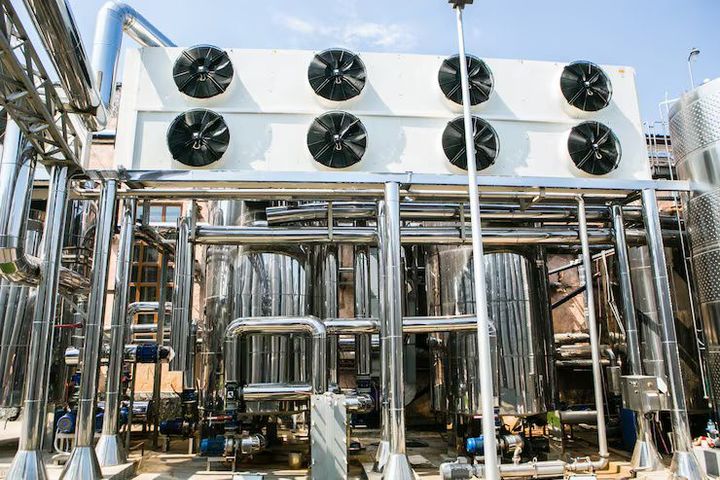
Commercial Cooling Systems Overview
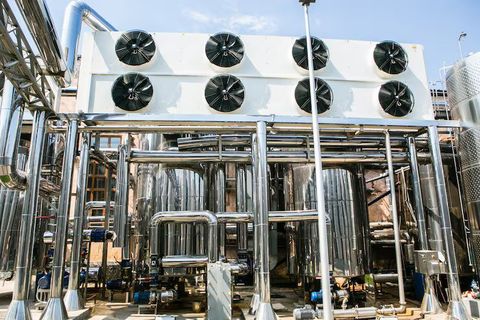
Commercial cooling systems are mechanical systems designed to regulate indoor temperature, humidity, and air quality in non-residential buildings. These buildings include office complexes, hospitals, manufacturing facilities, shopping centers, data centers, and educational institutions.
Unlike residential air conditioning units, commercial HVAC systems operate at a larger scale and are built to manage high cooling loads, continuous operation, and diverse indoor environments.
The purpose of commercial cooling technology is to:
-
Maintain thermal comfort in large spaces
-
Protect sensitive equipment in data centers and laboratories
-
Preserve goods in retail and food processing environments
-
Improve indoor air quality in high-occupancy buildings
Common types of commercial cooling systems include:
-
Chiller systems (air-cooled and water-cooled)
-
Rooftop HVAC units (RTUs)
-
Variable Refrigerant Flow (VRF) systems
-
Cooling towers
-
Precision cooling systems for data centers
These systems form a central part of modern building infrastructure and are often integrated with building automation systems for monitoring and control.
Why Commercial Cooling Systems Matter Today
The demand for energy efficient cooling systems has grown significantly due to rising temperatures, urban expansion, and digital infrastructure growth.
Commercial buildings account for a substantial portion of global electricity consumption. A large share of that energy use comes from heating, ventilation, and air conditioning. As a result, industrial HVAC systems directly influence:
-
Operational efficiency
-
Energy management strategies
-
Carbon emissions
-
Indoor environmental quality
In sectors such as healthcare and data centers, temperature control is critical for safety and system reliability. For example:
-
Hospitals rely on controlled environments for patient safety.
-
Data centers require precision cooling to prevent server overheating.
-
Manufacturing plants use process cooling to maintain product consistency.
Energy efficient HVAC technology also helps organizations align with environmental targets and sustainability reporting standards.
Below is a simplified comparison of common commercial cooling systems and their typical applications:
| System Type | Typical Application | Energy Efficiency Level | Maintenance Complexity |
|---|---|---|---|
| Air-Cooled Chiller | Medium-sized offices | Moderate | Moderate |
| Water-Cooled Chiller | Large commercial complexes | High | High |
| VRF System | Multi-zone buildings | High | Moderate |
| Rooftop HVAC Unit (RTU) | Retail and schools | Moderate | Low to Moderate |
| Precision Cooling System | Data centers | Very High | High |
Energy management has become a central topic in commercial real estate and facility management. High-efficiency chillers, smart thermostats, and automated building controls help reduce electricity demand during peak periods.
Recent Developments in Commercial HVAC Technology (2024–2025)
In 2024 and early 2025, several technological and regulatory developments influenced the commercial cooling industry.
Low-GWP Refrigerant Transition
Many countries accelerated the transition toward low Global Warming Potential (GWP) refrigerants. In the United States, phasedown requirements under the American Innovation and Manufacturing (AIM) Act continued into 2025. Similar measures under the EU F-Gas Regulation revisions took effect in stages beginning in 2024.
Smart HVAC Controls and IoT Integration
Building Energy Management Systems (BEMS) increasingly use cloud-based monitoring and predictive maintenance analytics. Artificial intelligence tools now assist in:
-
Real-time energy optimization
-
Fault detection and diagnostics
-
Automated temperature balancing
Heat Pump Expansion in Commercial Buildings
Commercial heat pump systems gained adoption in 2024 due to electrification strategies and carbon reduction initiatives. Air-to-water heat pumps are being integrated with large cooling systems to provide both heating and cooling functions.
Data Center Cooling Innovation
With the rapid expansion of AI infrastructure in 2024–2025, liquid cooling solutions and immersion cooling technologies have grown in importance. These systems are designed to handle higher server densities while improving thermal efficiency.
The following simplified trend illustration shows general industry focus areas over the past year:
Energy Efficiency ↑
Low-GWP Refrigerants ↑
Smart Automation ↑
Traditional Fixed-Speed Systems ↓
These changes reflect a broader shift toward sustainability and performance optimization.
Laws, Regulations, and Government Programs
Commercial cooling systems are influenced by national and international regulations focused on energy performance and environmental impact.
In the United States:
-
The Department of Energy (DOE) sets minimum energy efficiency standards for commercial HVAC equipment.
-
The Environmental Protection Agency (EPA) regulates refrigerants under the Clean Air Act and AIM Act.
-
ENERGY STAR certification provides efficiency benchmarks for eligible equipment.
In the European Union:
-
The Energy Performance of Buildings Directive (EPBD) requires improved building efficiency.
-
The F-Gas Regulation controls fluorinated greenhouse gases used in cooling systems.
In India:
-
The Energy Conservation Building Code (ECBC) establishes efficiency standards for commercial buildings.
-
The Bureau of Energy Efficiency (BEE) promotes high-efficiency cooling technologies.
Compliance with these policies typically involves:
-
Meeting Seasonal Energy Efficiency Ratio (SEER) or Integrated Energy Efficiency Ratio (IEER) thresholds
-
Using approved refrigerants
-
Maintaining system documentation and inspection records
Regulatory compliance is important for reducing environmental impact and ensuring system reliability.
Tools and Resources for Commercial Cooling Optimization
Various tools and digital resources support facility managers, engineers, and building owners in managing cooling performance.
Common tools include:
-
Cooling Load Calculators for estimating HVAC capacity requirements
-
Building Energy Modeling Software such as EnergyPlus
-
HVAC Performance Monitoring Platforms with real-time dashboards
-
Refrigerant Compliance Tracking Tools
-
Energy Benchmarking Websites like ENERGY STAR Portfolio Manager
Below is a general overview of helpful digital resources:
| Tool Type | Purpose |
|---|---|
| Energy Modeling Software | Simulates building energy use |
| Smart Thermostat Platforms | Remote temperature management |
| Predictive Maintenance Analytics | Early fault detection |
| HVAC Audit Templates | System inspection documentation |
| Carbon Emission Calculators | Environmental impact assessment |
These tools help organizations improve efficiency, monitor compliance, and support sustainability reporting initiatives.
Frequently Asked Questions
What is the difference between commercial and residential HVAC systems?
Commercial HVAC systems are larger, more complex, and designed to cool multi-zone buildings with higher occupancy levels. They often use modular designs and centralized chillers, while residential systems typically serve single-family homes.
How does a chiller system work in commercial buildings?
A chiller removes heat from water through a refrigeration cycle. The cooled water is circulated through air handling units to absorb indoor heat, which is then expelled outside through cooling towers or condensers.
Why are low-GWP refrigerants important?
Low Global Warming Potential refrigerants reduce environmental impact and comply with international climate agreements. Many regions have established phasedown schedules for high-GWP substances.
What is a Building Energy Management System (BEMS)?
A BEMS is a digital platform that monitors and controls building systems such as HVAC, lighting, and ventilation. It improves energy efficiency and provides performance data for analysis.
How often should commercial cooling systems be inspected?
Inspection frequency depends on local regulations and manufacturer guidelines. Many jurisdictions require periodic energy audits or refrigerant leak checks to maintain compliance.
Conclusion
Commercial cooling systems are a foundational component of modern infrastructure. From office towers to industrial facilities and data centers, these systems maintain temperature stability, protect equipment, and support occupant comfort.
In 2024–2025, the industry has shifted toward energy efficient HVAC systems, smart automation, and environmentally responsible refrigerants. Regulatory frameworks in regions such as the United States, European Union, and India continue to influence system design and operation.