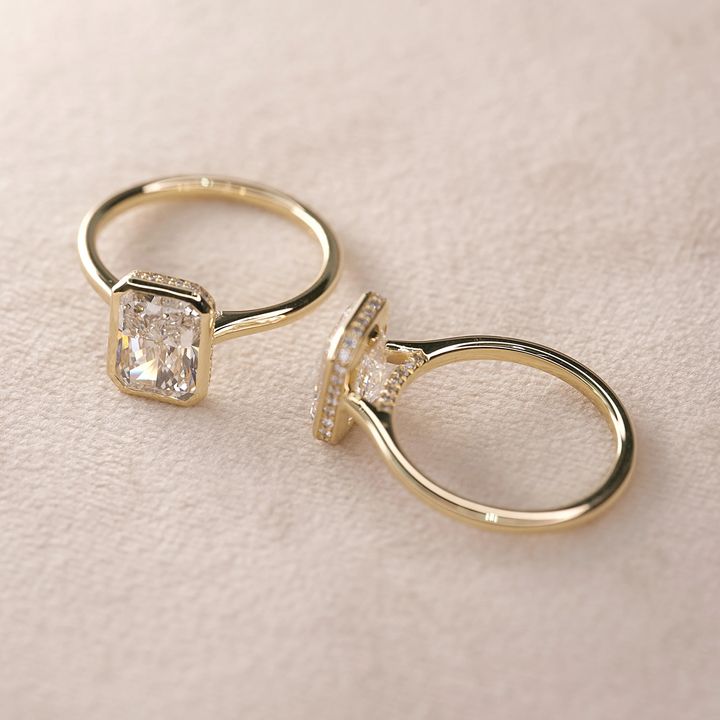
Explore Bezel Settings: Overview, Facts & Styling Advice
Bezel settings are a popular jewelry setting style in which a thin rim of metal surrounds and secures a gemstone. Instead of using small prongs to hold a stone in place, the metal edge encircles the gem’s perimeter, either fully or partially. This design creates a smooth and protective frame around the stone.
Historically, bezel settings have been used for centuries in fine jewelry design. Ancient civilizations relied on this technique to secure gemstones in crowns, ceremonial ornaments, and early engagement rings. The method exists primarily to enhance gemstone security and durability while maintaining a clean and modern appearance.
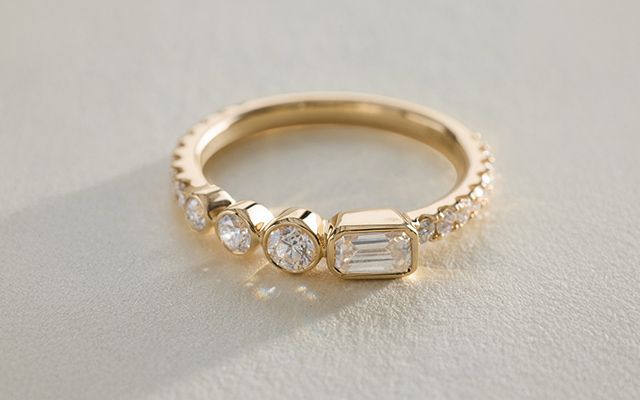
In contemporary jewelry terminology, bezel settings are often discussed alongside related concepts such as diamond ring settings, engagement ring styles, fine jewelry craftsmanship, and gemstone durability. Because they combine structural protection with aesthetic simplicity, they remain relevant in both classic and minimalist designs.
Bezel settings can be categorized into:
-
Full bezel: Metal completely surrounds the gemstone
-
Partial or half bezel: Metal covers only part of the stone’s edge
-
Flush or gypsy setting: The gemstone sits level with the surface of the metal
Each variation serves a slightly different purpose in terms of appearance, light exposure, and overall ring profile.
Why Bezel Settings Matter Today
Bezel settings are increasingly relevant in modern jewelry conversations due to lifestyle changes and evolving design preferences. As more people prioritize durability and low-maintenance accessories, protective settings have gained attention.
From a practical standpoint, bezel settings offer:
-
Enhanced gemstone security
-
Reduced risk of snagging on clothing
-
Lower exposure of stone edges to impact
-
Smooth, streamlined surface
This makes them particularly suitable for individuals with active routines. Compared to prong settings, bezel designs tend to hold stones more firmly, reducing the likelihood of loosening over time.
From a design perspective, bezel settings also complement contemporary fashion trends. Minimalist aesthetics, geometric silhouettes, and sleek metal finishes are widely appreciated in modern engagement ring styles and everyday fine jewelry.
Another important factor is gemstone protection. Softer stones, such as opal or emerald, benefit from the added structural support of a bezel. The surrounding metal rim can shield vulnerable edges from chipping.
Bezel settings also address concerns related to:
-
Long-term durability
-
Practical daily wear
-
Structural integrity of diamond ring settings
-
Sustainable jewelry design choices
In discussions about high-value gemstones and certified diamonds, secure mounting is a significant aspect of responsible ownership. Therefore, understanding bezel settings can help individuals make informed decisions regarding gemstone safety and longevity.
Recent Updates and Trends
In recent months, bezel settings have appeared more frequently in jewelry trend reports and design showcases. Several developments are shaping current interest.
One noticeable trend is the rise of lab-grown diamonds paired with bezel settings. As lab-created stones gain recognition in the fine jewelry market, designers are combining them with secure, modern mountings. This pairing highlights sustainability and durability within the same piece.
Minimalist engagement rings featuring thin bezel frames around round or oval diamonds have also gained popularity. Social media platforms and fashion publications have highlighted these understated styles for their clean lines and timeless appeal.
Another update involves mixed metal designs. Jewelers are experimenting with contrasting tones, such as yellow gold bezels around white metal bands, to create visual emphasis around the gemstone.
Vintage-inspired bezel settings are also resurfacing. Art Deco and antique-style jewelry often incorporated bezel or flush mount techniques, and current collections are drawing inspiration from those historical patterns.
Industry commentary in the past year has noted that consumers increasingly prioritize practical engagement ring settings. This shift is influencing design trends across diamond certification platforms, jewelry education websites, and online comparison tools.
Laws and Regulatory Considerations
Although bezel settings themselves are a design feature, they are influenced by broader regulations affecting the jewelry industry.
Precious metal standards are regulated in many regions to ensure accurate metal purity marking. Hallmarking laws typically require disclosure of gold, platinum, or silver purity levels. Since bezel settings involve significant metal usage, compliance with metal purity standards is important.
Gemstone disclosure regulations also affect bezel-set jewelry. Industry guidelines require clear identification of natural, treated, or lab-grown stones. Accurate labeling protects consumers and maintains transparency within the diamond grading and certification system.
In addition, environmental and ethical sourcing frameworks influence gemstone mounting choices. Responsible sourcing programs and traceability standards encourage transparent supply chains for diamonds and colored gemstones.
Advertising standards apply to all jewelry descriptions, including bezel settings. Claims regarding durability, security, or gemstone protection must remain factual and evidence-based.
Customs and import regulations can also impact jewelry manufacturing and distribution, particularly when precious metals or gemstones cross international borders.
While bezel settings are primarily a design technique, they operate within these broader legal and regulatory structures that govern fine jewelry craftsmanship.
Tools and Resources for Understanding Bezel Settings
Several educational and digital tools can help individuals better understand bezel settings and related jewelry topics.
Gemstone education platforms
-
Gemological Institute of America (GIA) provides educational materials on diamond grading, gemstone properties, and setting types.
-
International Gemological Institute (IGI) offers resources on diamond certification and mounting considerations.
Ring design visualization tools
-
Online ring setting comparison tools allow users to view prong vs. bezel differences.
-
3D jewelry modeling software used by designers demonstrates how bezel rims secure stones.
Metal purity reference charts
-
Hallmark guides explain gold karat, platinum purity, and alloy composition.
Diamond grading reports
-
Certification documents detail cut, clarity, and carat weight, which may influence setting suitability.
Jewelry care checklists
-
Maintenance guides outline cleaning methods appropriate for bezel-set stones.
Below is a simple comparison table illustrating general differences between bezel and prong settings:
| Feature | Bezel Setting | Prong Setting |
|---|---|---|
| Stone Protection | High edge protection | Moderate edge exposure |
| Light Exposure | Slightly reduced from sides | Maximum side exposure |
| Snag Resistance | Smooth surface | Higher chance of snagging |
| Maintenance Frequency | Typically lower | Periodic prong checks needed |
| Style Appearance | Modern, sleek, minimal | Classic, traditional |
This table helps clarify functional differences without suggesting superiority. The appropriate setting depends on individual preferences and gemstone characteristics.
Frequently Asked Questions
What is the main advantage of a bezel setting?
The primary advantage is enhanced gemstone protection. The surrounding metal rim shields the stone’s edges from impact and reduces the likelihood of loosening.
Does a bezel setting reduce a diamond’s sparkle?
A full bezel may slightly limit light entering from the sides, but the overall brilliance still depends largely on the diamond cut quality. Well-cut diamonds maintain strong light performance even in bezel settings.
Are bezel settings suitable for engagement rings?
Yes, they are widely used in engagement ring styles, especially for individuals who prefer low-profile, secure designs.
Can all gemstones be set in a bezel?
Most gemstones can be bezel set. Softer stones, such as opal and emerald, often benefit from the added protection. However, setting design should match the stone’s hardness and structural integrity.
Is maintenance different compared to prong settings?
Bezel settings generally require fewer structural inspections because there are no prongs to tighten. Regular cleaning and occasional professional evaluation remain advisable for long-term car
Conclusion
Bezel settings represent a time-tested jewelry technique that combines structural security with refined aesthetics. By encircling the gemstone in metal, this setting style enhances protection while offering a smooth and modern appearance.
Today, bezel settings remain relevant due to shifting lifestyle needs, minimalist design preferences, and growing awareness of gemstone durability. Recent trends highlight their compatibility with lab-grown diamonds, mixed metal bands, and vintage-inspired collections.
Although the design itself is straightforward, it operates within broader jewelry regulations related to metal purity, gemstone disclosure, and ethical sourcing. Educational platforms and certification organizations provide helpful information for understanding how bezel settings fit into the larger world of fine jewelry craftsmanship.